
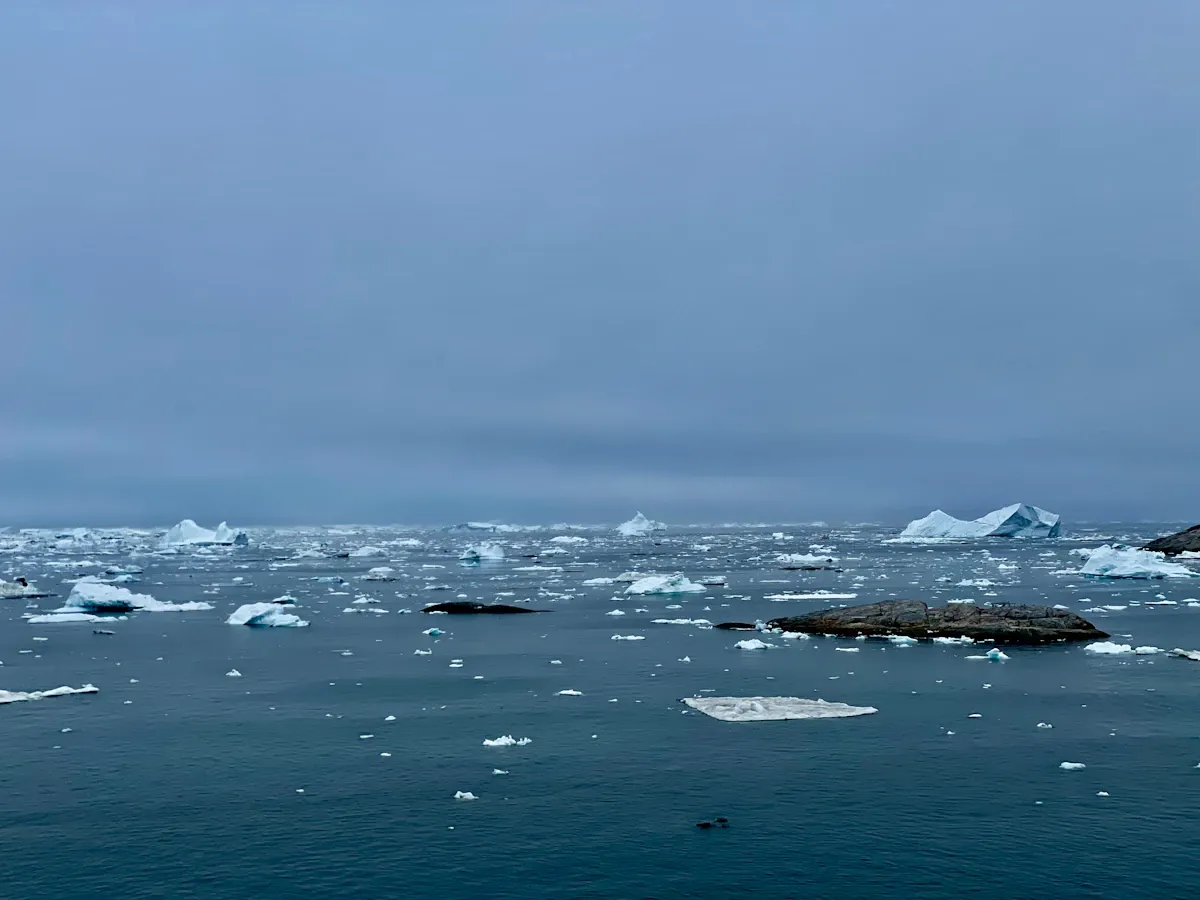
Twenty years ago, a 0.1°C shift in ocean temperature would have been invisible to marine ecosystems. Today, that same tiny rise is driving what researchers now call a 'staggering and deeply concerning' collapse of fish populations across the northern hemisphere. If you eat seafood, live near a coast, or care about the planet's food systems, this number should keep you up at night.
Chronic Ocean Heating Drives a 7.2% Fish Decline Per Decade
A study published in February 2026 in Nature Ecology & Evolution has revealed a direct and alarming link between chronic ocean floor warming and the loss of marine life. Researchers examined 33,000 fish populations across the northern hemisphere between 1993 and 2021, isolating the effect of gradual seabed warming from short-term shifts like marine heatwaves. They found that fish biomass falls by 7.2% for every 0.1°C of warming per decade. That is not a gradual dip. That is a steep, consistent downward curve happening right now, silently, beneath the waves.
The study distinguishes between surface warming and deep ocean heating. Most public attention focuses on sea surface temperatures, coral bleaching events, and hurricane intensity. But this research zeroed in on the ocean floor, where vast numbers of fish species actually live, feed, and reproduce. The findings show that chronic, slow-burn heating at the bottom of the sea is doing more structural damage to fish populations than dramatic surface heat spikes. In some cases, the researchers documented biomass drops as high as 19.8% in a single year.
The lead author, Shahar Chaikin, a marine ecologist at the National Museum of Natural Sciences in Spain, put it plainly: 'To put it simply, the faster the ocean floor warms, the faster we lose fish.' There is no ambiguity in that statement. The data backs it up with clear statistical weight across multiple ocean basins.
Why a Fraction of a Degree Matters for Marine Biodiversity
Most people hear 0.1°C and think it sounds trivial. After all, you cannot feel a difference of 0.1°C in your morning coffee. But ocean ecosystems do not work like human senses. Marine species, especially bottom-dwelling fish, have evolved over millions of years to thrive in extremely narrow temperature bands. A shift of even a tenth of a degree can push a species past its physiological limits.
Fish are cold-blooded creatures. Their metabolism, reproduction cycles, and feeding behavior are all dictated by the temperature of the water around them. When the water warms even slightly, it forces fish to burn more energy just to survive. That leaves less energy for growth and reproduction. Over time, fewer juvenile fish survive to adulthood, and the population spirals downward.
The problem is compounded by the fact that ocean floor heating is chronic, not episodic. Unlike a heat wave that comes and goes, this is a slow, relentless pressure that gives fish populations no time to recover. Each decade brings a measurable 7.2% reduction, and those losses stack on top of each other. After three decades, you are looking at a fundamentally altered ecosystem with no easy path back to what it was.
The Real Danger: Invisibility and Compounding Losses
What makes this finding particularly unsettling is how invisible it has been. Ocean floor temperature data is harder to collect than surface data. Deep-sea monitoring equipment is expensive, and the political will to fund widespread deep ocean observation has historically been weak. So while scientists knew the ocean was absorbing enormous amounts of heat, the specific biological consequences at the sea floor remained largely guesswork until now.
This study changes that. It provides concrete evidence that the heat absorbed by the ocean is not just sitting there harmlessly. It is actively dismantling marine food webs from the bottom up. When bottom-dwelling fish decline, the ripple effects move through the entire ocean ecosystem. Predators that rely on those fish lose their food source. Scavengers that depend on the same habitat find fewer resources. The whole structure weakens.
There is also a misleading dynamic that this research helped uncover. Marine heatwaves can create short-term population booms in colder waters that mask the long-term damage. For example, a heatwave might cause sprat populations to fall in the warm Mediterranean Sea, but simultaneously trigger a boom in the colder North Sea. Carlos García-Soto, a scientist at the Spanish National Research Council and co-author of the UN's world ocean assessment, warned that this combination 'introduces a clear risk of poor interpretation when taking decisions.' The temporary gains in cold waters make the overall decline look less severe than it really is.
Overfishing Compounds the Warming Crisis
The study's findings become even more concerning when you factor in overfishing. Guillermo Ortuño Crespo, a marine biologist who co-directs a high seas specialist group with the International Union for Conservation of Nature, praised the study as 'methodologically sound and highly valuable' but cautioned against treating climate breakdown as the sole explanation for declining fish stocks.
'Historically, overfishing has been the main driver of biomass declines in many of the world's fisheries,' Ortuño Crespo noted, pointing out that the proportion of overfished stocks globally continues to rise according to the UN Food and Agriculture Organization. The 7.2% per decade figure likely understates the full picture because it isolates the temperature variable. In reality, fish populations are being hit by chronic heating and unsustainable fishing at the same time, a multi-front assault that marine ecosystems simply cannot withstand.
What This Means for Food Supply and Coastal Economies
Roughly 3.3 billion people depend on marine biodiversity for their protein intake, according to the UN. A sustained decline in fish populations is not an abstract environmental concern. It is a direct threat to food security for a massive portion of the global population. As fish stocks thin out, catches shrink, prices rise, and the communities that rely on small-scale fishing are hit first and hardest.
Coastal economies in developing nations are especially vulnerable. In places across Southeast Asia, West Africa, and parts of Latin America, fishing is not just an industry. It is the primary source of income and dietary protein. When the ocean floor warms and fish disappear, these communities have no alternative to fall back on. They cannot simply switch to farming or move to another region. The loss is immediate and personal.
Even in wealthier nations, the economic ripple will be significant. Commercial fisheries will face shrinking quotas, seafood processors will lose volume, and restaurants will deal with volatile pricing. The biological trend is clear enough that the financial consequences are inevitable.
What Comes Next for Ocean Conservation
The research community is now calling for a major expansion of deep ocean monitoring systems. Without better data from the ocean floor, it is nearly impossible to track these declines in real time or predict where the next population crash will hit. Current observation networks are heavily biased toward surface waters, leaving a massive blind spot exactly where this study shows the damage is occurring.
Marine protected areas, or MPAs, are likely to become an even more central part of the conversation. Protecting sections of the ocean floor from fishing and industrial activity does not solve the temperature problem, but it does reduce other pressures on fish populations, giving them a slightly better chance to adapt. Some scientists argue that MPAs need to be expanded dramatically and connected through migration corridors so fish can shift their ranges as waters warm.
The harder truth is that none of these measures address the root cause. The ocean floor is warming because the ocean is absorbing the vast majority of excess heat trapped by greenhouse gases in the atmosphere. Slowing or reversing this trend requires aggressive cuts to carbon emissions, not just better fisheries management. You can protect a stretch of ocean floor perfectly, but if the water keeps warming, the fish will still decline.
A Problem We Cannot Outswim
This study strips away the comfort of distance. The ocean floor feels remote, but its decline is connected to every plate of seafood, every coastal community, and every ton of carbon released into the atmosphere. A 0.1°C rise sounds like nothing. It is, in fact, enough to rewrite the biology of the deep ocean within a single human generation.
The numbers are no longer theoretical. A 7.2% decline per decade is a measured, documented reality. The question is no longer whether marine life is in trouble. The question is whether we will treat this as the emergency it clearly is, or whether we will keep looking at the surface and pretending the deep is fine. What do you think it will take to get the world to pay attention to what is happening at the bottom of the sea?
Comments