Google, Apple, and IBM have all dropped degree requirements for a significant share of their job openings. Five years ago, that would have sounded absurd. Today, it is one of the clearest signals that something fundamental has changed in how we prove we can do a job.
The Degree Is No Longer the Default
For decades, the formula was simple. You graduated high school, went to college for four years, got a degree, and got hired. Employers used the degree as a shortcut. It was not perfect, but it worked well enough when jobs changed slowly and skills stayed relevant for an entire career.
That era is over. The shelf-life of a learned skill has shrunk to less than three years, according to an analysis by Avanmag. What you learned in your sophomore year might be outdated by the time you collect your diploma. Employers have noticed this gap, and it has forced a genuinely uncomfortable question: what exactly does a bachelor's degree prove in 2026?
The answer, increasingly, is not much about your actual ability to do the work. It proves you can commit to something for four years. It proves you can navigate an institution. But it does not prove you can build a data pipeline, configure a cloud environment, or run an AI-powered marketing campaign. Those are the skills companies are desperate for right now.
This mismatch has opened the door for an alternative that has been quietly gaining ground for years. Micro-credentials, sometimes called stackable certificates or digital badges, have moved from the fringe into the mainstream hiring conversation. They are short, focused programs that teach one specific skill and verify that you actually have it. No general education requirements. No electives. Just the thing you need to do the job.
Why Micro-Credentials Are Outperforming Degrees in Hiring
The shift is not just philosophical. There are hard, practical reasons employers are changing their behavior. Cost and speed sit at the top of the list.
A traditional bachelor's degree in the United States still carries a staggering price tag, with student loan debt reaching $1.77 trillion in 2025, according to the Federal Reserve. Micro-credentials, by contrast, typically cost a fraction of that and take weeks to months to complete, not years. For someone switching careers at age 34 with a mortgage, the math is not even close. You can earn a Google Project Management certificate in under six months for a fraction of what a single semester of college costs.
But affordability only matters if employers actually respect the credential. And that is where the data gets interesting. A growing number of hiring managers now say they prioritize demonstrated skills over degree requirements when evaluating candidates. LinkedIn's own data has shown a consistent rise in skills-based hiring since 2022, with major employers leading the charge.
Companies like Google, IBM, and Delta Airlines have stripped degree requirements from more than half of their job postings. They did not do this out of charity. They did it because their own internal data showed that degree holders did not consistently outperform non-degree holders in technical roles. Once a few massive brands validated this approach, others followed. It became safe to question the default.
The Stackability Factor
Here is the part that makes micro-credentials genuinely powerful, not just cheaper. You can stack them.
Think of it like building with Lego blocks. You earn a certificate in Python programming. Then you earn one in data analysis with Python. Then you earn one in machine learning basics. Each one takes a few weeks. Each one is a verified, shareable credential. Together, they form something that looks a lot like a specialized degree, but with one critical difference: every single piece is current and relevant.
Traditional degrees cannot do this. Once you graduate, your degree is frozen in time. You cannot go back and swap out your 2022 statistics course for a 2026 version. Micro-credentials let you continuously update your professional profile without starting over.
This stackability also solves a problem that has haunted adult learners for years. Most people cannot quit their jobs for four years to retrain. But almost anyone can find three hours a week for a month to earn a focused certificate. It lowers the barrier to entry so dramatically that it changes who can participate in upskilling entirely.
The Labor Market Is Rewriting the Rules
This is not a temporary trend driven by a tight tech job market. The structural shift in hiring is real and accelerating. Online education platforms in the US have seen significant growth specifically in micro-credential enrollment, outpacing traditional degree program growth. People are voting with their wallets and their time.
The labor market itself is sending a signal. Job postings increasingly list specific skills and competencies rather than credential requirements. When a posting asks for experience with Kubernetes, it does not matter whether you learned that in a university lecture hall or through a self-paced online certificate. The infrastructure does not care about your diploma. It either works or it does not.
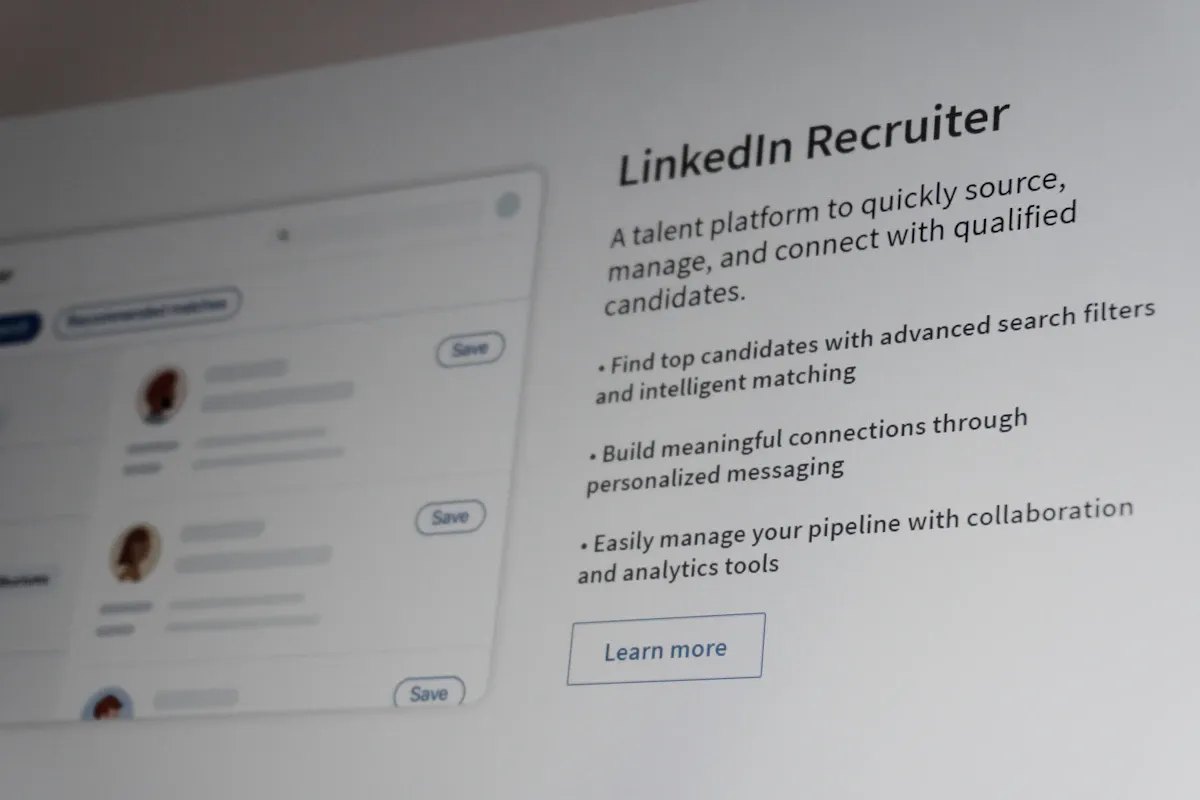
Hiring platforms have adapted to make this easier. LinkedIn allows you to add verified certificates directly to your profile, where they appear alongside your work experience. Some platforms even tie credentials to skill assessments, so employers can see not just that you completed a program, but that you passed a proctored test proving your competence.
This verification layer matters more than most people realize. A degree has always been trusted partly because institutions vetted students through admission standards. Micro-credentials needed their own trust mechanism, and automated skill assessments have become that mechanism. You cannot simply click through a course and claim the credential. You have to prove you earned it.
There is also a geographic and demographic dimension to this shift. Micro-credentials are dramatically more accessible to people who cannot relocate to a university town, people who are caregiving for family members, and people who are already working full time. In that sense, this is not just a hiring trend. It is an expansion of who gets to participate in high-skill work.
What This Means for You in 2026
So what should you actually do with this information? That depends on where you are in your career.
If you are early in your career and can afford a traditional degree without crushing debt, it still carries value. It gives you a professional network, a broad foundation, and a credential that many older hiring managers still reflexively trust. But you should absolutely supplement it with micro-credentials in your specific area of interest. The combination is stronger than either alone.
If you are mid-career and thinking about a pivot, micro-credentials are almost certainly your best move. Quitting your job for a master's program is a massive risk. Earning three stacked certificates over six months while keeping your income is a calculated, manageable step. And if you are in a field like cloud computing, data science, cybersecurity, or AI, the employers you want to work for have already told you they do not require the degree.
If you are a hiring manager, the implication is clear. Your job postings are probably still screening out talented people because of a degree requirement that has nothing to do with the actual work. Removing it does not lower your standards. It broadens your pool and forces you to evaluate people on what they can actually do, which is what you wanted to know in the first place.
The traditional degree is not going to disappear overnight. It will hold prestige for a long time, especially in regulated fields like medicine and law. But for the vast majority of knowledge work, the question has already shifted from 'do you have a degree?' to 'can you show me what you can do?' Micro-credentials are winning because they answer the second question directly, and they do it in weeks instead of years. So if you were waiting for permission to skip the traditional path and start building real skills, consider this it. What is the first micro-credential you could start this week?
Comments