
Thirty years ago, you could walk into almost any American town and find a handful of places that existed purely for people to be together. A library reading room. A corner bar with stools worn smooth by regulars. A park bench where neighbors actually knew each other's names. Today, many of those spaces are gone or hollowed out, and the absence is quietly reshaping our mental and physical health in ways most of us have not stopped to notice.
What Third Places Are and Why They Are Vanishing
Sociologist Ray Oldenburg coined the term 'third places' in 1989 to describe the spaces that sit between your first place (home) and your second place (work). These are the cafes, barber shops, community centers, libraries, and pubs where conversation flows freely, no invitation is required, and nobody expects you to buy anything just to exist there.
The key feature of a true third place is accessibility. It costs little to nothing. It welcomes people across age, income, and background. It shows up regularly in your week without demanding planning or a calendar invite.
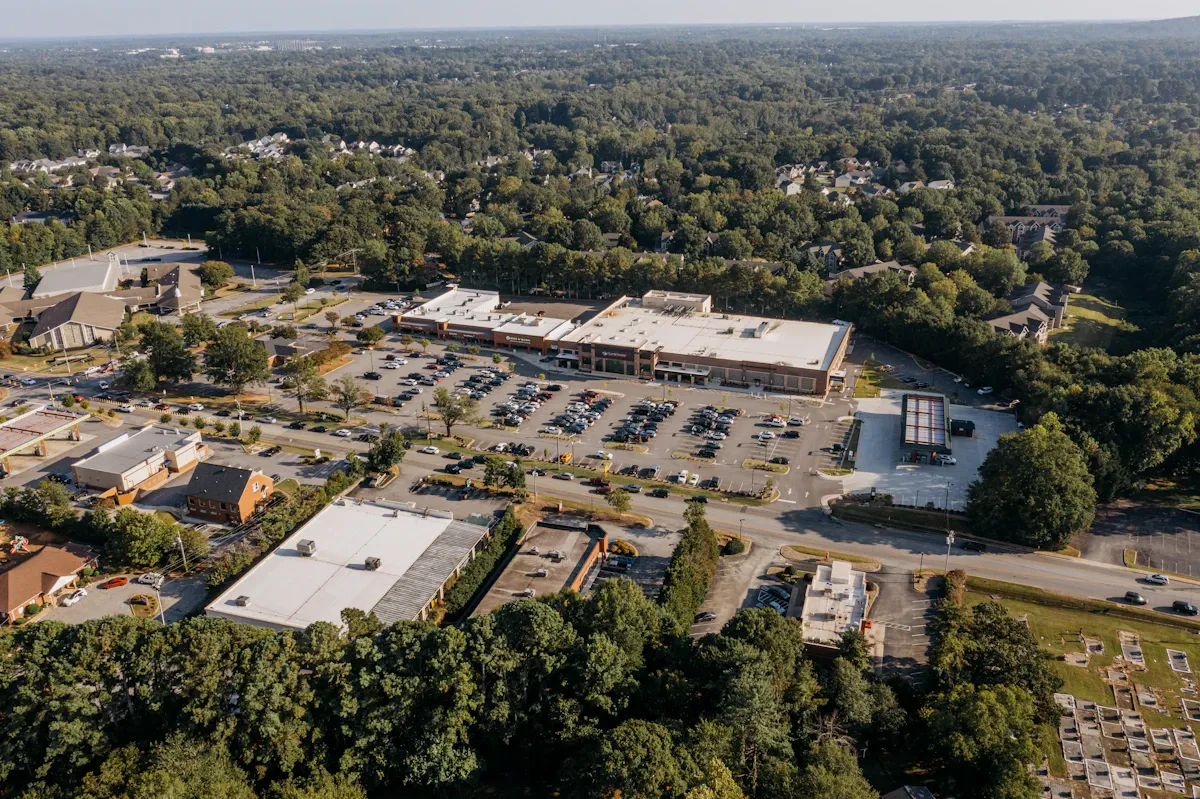
But these spaces have been eroding for decades. Libraries face budget cuts and political pressure. Independent cafes lose ground to chains designed for takeout, not lingering. Community centers shutter when municipal budgets tighten. Suburban sprawl replaced walkable main streets with strip malls you cannot reach without a car.
The pandemic accelerated what was already happening. Lockdowns forced third places to close, and many never reopened. A 2019 paper published in Health & Place warned about the consequences of third place closures long before COVID hit, arguing that losing these spaces directly threatens collective health and wellbeing. The researchers proposed several questions for future study, including whether quality of life in neighborhoods is affected by the availability and accessibility of third places. Their conclusion was straightforward: third places need to be sustained in the interest of wellbeing. They are social infrastructure, as real and necessary as roads and power lines.
The Public Health Cost of Nowhere to Go
When third places disappear, loneliness moves in. That is not a metaphor. The U.S. Surgeon General released an advisory in 2023 calling loneliness a public health epidemic, noting that a significant portion of U.S. adults experience measurable levels of loneliness. The advisory explicitly named social infrastructure as part of the solution.
Think about what a library actually does for a retired person living alone. It gives them a reason to leave the house. It provides a warm seat, a familiar face at the front desk, and the quiet company of other humans even without a single conversation. That ambient social contact matters more than most people realize.
Research on social isolation shows clear biological effects. Chronic loneliness is associated with higher risks of heart disease, dementia, stroke, and premature death. The Surgeon General's report compared the health impact of chronic loneliness to smoking up to 15 cigarettes per day. When we talk about public health, we usually think about hospitals, vaccines, and clean water. We rarely think about whether there is a place in your neighborhood where you can sit down without spending money.
Who Gets Hit Hardest
The loss of third places does not affect everyone equally. Low-income communities lose them first and suffer the most. Wealthier people can substitute a country club, a co-working membership, or a large home that hosts gatherings. People with less money depend on public, free spaces.
Older adults are especially vulnerable. Research has found that a substantial share of adults aged 65 and older are considered socially isolated. For an older person who can no longer drive, the disappearance of a nearby community center or library branch is not an inconvenience. It is a severing of their primary connection to the outside world.
Young people feel it too. Teenagers and young adults need semi-public spaces to gather that are not school and not home. Malls used to serve this function. Many malls are now dead or converted into fulfillment centers. Without affordable, accessible third places, young people retreat into screens, which provide the illusion of connection without the biological benefits of in-person contact.
Social Infrastructure as a Policy Question
This is ultimately a question of priorities. Cities and towns decide every year what to fund and what to cut. When a library loses its budget, when a recreation center closes for good, when zoning laws make it impossible to open a small neighborhood cafe because parking requirements are too steep, those are policy choices with health consequences.
Urban planner Eric Klinenberg argued in his book Palaces for the People that social infrastructure determines whether communities survive crisis or collapse under it. He studied the 1995 Chicago heat wave and found that neighborhoods with strong third places, places where people gathered casually and knew each other, had dramatically lower death rates than neighborhoods that lacked them. The difference was not income or race alone. It was whether the built environment gave people a reason to check on each other.
Some cities are starting to treat this seriously. Barcelona's superblocks program reclaimed street space from cars and turned it into gathering areas. Some American cities have experimented with turning underused commercial spaces into free community hubs. But these examples remain the exception, not the rule.
The challenge is that the benefits of third places are diffuse and long-term. It is hard to put a number on the depression that did not happen because someone had a place to go on a Tuesday afternoon. It is hard to measure the social trust that builds slowly over months of shared coffee shop tables. And so these spaces lose funding battles against things that feel more urgent, even when they are not more important.
What Happens If We Do Nothing
The trajectory is not hard to see. Fewer free, accessible gathering spaces mean fewer spontaneous interactions between people who are different from each other. That means less empathy, less social trust, and more polarization. Loneliness deepens. Mental health burdens grow. Healthcare costs follow.
We are already seeing some of this. Civic engagement has declined for decades. Trust in neighbors has dropped. People report having fewer close friends than previous generations. These trends are connected to the physical spaces where relationships used to form organically.
Rebuilding third places will not solve loneliness on its own. But without them, no other solution fully works. Therapy helps individuals. Social policy helps systems. Third places help neighborhoods breathe.
So here is a question worth sitting with: when was the last time you spent time in a space where nobody expected anything from you, where you did not have to spend money, and where you simply existed alongside other people? If you cannot answer that, you are not alone. And that is exactly the problem.
Comments