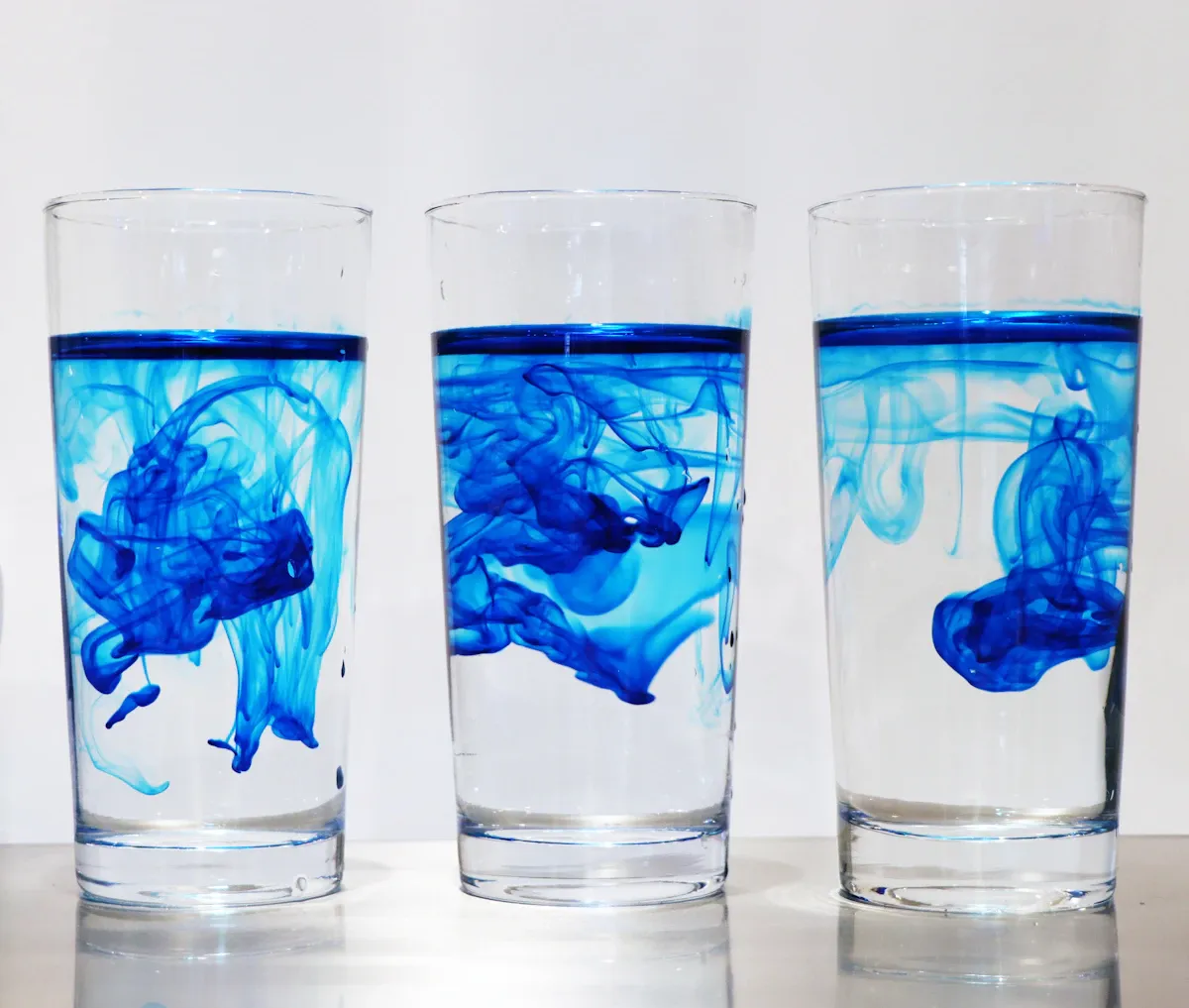
Five hundred years ago, Galileo rolled balls down inclined planes in his workshop to unlock the laws of motion. Today, you can do something similar with a baking sheet and a marble from your kitchen drawer. Physics is not locked inside expensive laboratories. It is sitting in your cabinets right now, waiting for you to notice it.
Why Kitchen Physics Experiments Actually Work
Most people think of science as something that requires white coats and million-dollar equipment. That idea is backwards. Some of the most important physics discoveries in history started with everyday objects. Newton watched an apple fall. Archimedes sat in a bathtub and figured out density by watching the water rise. The point is not the equipment. The point is paying attention to what is already happening around you.
Kitchen experiments work because physics does not care about where you are. Gravity pulls the same way on a marble in your kitchen as it does on a satellite in orbit. Water behaves the same way in a glass as it does in a river. The principles are universal. The setting is just a detail.
Science Sparks, a UK-based science education platform, points out that simple home experiments help build genuine understanding of fundamental concepts like forces, light, and density. You do not need a degree to start. You need curiosity and about ten minutes. That is it.
Here are five experiments you can pull off right now with things you already own.
1. The Density Tower: Stack Liquids That Refuse to Mix
Grab a clear glass, honey, corn syrup, dish soap, water, and vegetable oil. Pour each one in slowly, layer by layer. If you do it right, they will not blend. They will sit on top of each other like a tiny striped landscape inside your glass.
This happens because each liquid has a different density. Density is just how tightly packed the matter in a substance is. Honey is dense. Its molecules are crammed together. Vegetable oil is less dense. Its molecules have more room between them. So the heavier liquids sink to the bottom and the lighter ones float on top. Science Sparks recommends choosing a selection of liquids and placing them in density order, from most dense to least dense, pouring carefully into a tall glass to end up with a colorful stack.
The trick is patience. Tilt the glass slightly and pour each liquid slowly against the side. If you dump them in, they will mix and you will get a murky mess. Take your time. Let each layer settle before adding the next one.
You can also drop small objects into the finished tower. A grape might sink through the oil but stop at the dish soap. A popcorn kernel might hover in the water layer. Each object finds its level based on its own density compared to the liquids around it. It is a visible, tangible demonstration of a concept that sounds abstract in a textbook.
2. The Bending Pencil: Watch Light Change Direction
Fill a glass with water and drop a pencil in it. Look at it from the side. The pencil will appear to bend or break at the surface of the water. Pull it out, and it is perfectly straight. Put it back in, and it bends again.
This is refraction. Light travels through different materials at different speeds. It moves faster through air than through water. When light crosses the boundary between air and water, it changes speed and that shift causes the light beam to bend. Your eyes see the bent light and your brain interprets it as a bent pencil. Science Sparks explains this same bending principle using prisms. Isaac Newton experimented with prisms in the 1660s and realized that light bends, or refracts, as it passes through transparent materials, with different colors bending at different angles.
The same principle explains why pools look shallower than they really are. The light from the bottom of the pool bends when it hits the surface, making the bottom appear closer to you than it actually is. Refraction has been tricking swimmers for centuries.
Try moving the pencil to different angles. Watch how the bend changes. Push it straight down into the water and the bend almost disappears. Tilt it at a sharp angle and the break looks dramatic. You are watching optics in real time, no lenses required.
3. The Hovering Plate: Friction Meets Air Pressure
Place a plastic plate on a flat table. Give it a good spin like a top. Watch how quickly it stops. Now do the same thing but blow a steady stream of air under the plate as it spins. It will spin significantly longer.
This experiment demonstrates friction reduction through air pressure. When the plate sits directly on the table, the surfaces rub against each other. That rubbing creates friction, and friction steals the plate's energy. When you force air between the plate and the table, the plate floats on a thin cushion of air. The surfaces no longer touch, so friction drops almost to zero.
You do not need fancy equipment to create this air cushion. A straw angled under the edge of the plate works. Even a balloon attached to the center of the plate can supply a steady flow of air. The concept is identical to what makes hovercrafts work. A hovercraft is just a very large plate with a very powerful fan blowing air underneath it.
This one is fun to race. Spin one plate normally and one on an air cushion at the same time. The difference in spin time is hard to miss. It makes friction, a force you usually cannot see, suddenly obvious.
4. The Egg Drop Inertia Test: Why Seatbelts Matter
Set a raw egg on a paper plate or an index card. Position the plate over a glass of water. Now flick the card horizontally, hard and fast. The card flies away. The egg drops straight down into the water. Unbroken.
This is inertia in action. Newton's first law says an object at rest stays at rest unless a force acts on it. When you flick the card, you apply force to the card, not the egg. The egg is just sitting there. It wants to keep sitting there. By the time gravity pulls it down, the card is already gone, and the egg falls cleanly into the water below.
The speed of your flick matters. If you pull the card slowly, friction between the egg and the card drags the egg sideways and it misses the glass. Fast is the key. A quick, sharp flick breaks the friction before it has time to move the egg.
This is essentially how seatbelts work. When a car stops suddenly, your body wants to keep moving forward. The seatbelt applies a force to stop you. Without it, inertia carries you straight into the dashboard. A raw egg in a glass of water is a surprisingly good model for a person in a car crash. Simple, but the physics is dead serious.
5. The Dancing Raisins: Watch Buoyancy and Gas Team Up
Pour a clear carbonated drink into a tall glass. Drop in five or six raisins. For a few seconds, nothing happens. Then the raisins start moving. They sink, rise to the top, sink again, rise again. They look like tiny swimmers doing laps.
Carbonated water is full of dissolved carbon dioxide gas. The surfaces of the raisins are rough and wrinkled, which makes them perfect spots for gas bubbles to attach. As bubbles collect on a raisin, they act like tiny life jackets. The bubbles are less dense than the liquid, so they lift the raisin upward.
When the raisin reaches the surface, some of the bubbles pop. The raisin loses its buoyancy and sinks again. At the bottom, more bubbles attach, and the cycle repeats. This can go on for quite a while until the drink goes flat.
You can experiment with different objects. Try small pasta shapes, bits of crouton, or rice. Different materials have different surface textures, which changes how well bubbles stick to them. Some objects will barely move. Others will shoot to the top like rockets. The variable is surface area, and you can test it directly.
What Kitchen Physics Actually Teaches You
These five experiments share something important. None of them require you to memorize a formula. None of them need a calculator. They all work because you can see the principle happening with your own eyes. Density stacks liquids. Light bends at boundaries. Air reduces friction. Inertia keeps objects still. Gas bubbles create buoyancy.
That is the real value of hands-on science. Reading about refraction is fine. Watching a pencil bend in a glass of water makes you believe it. The experience sticks in a way that a paragraph in a textbook usually does not. Science Sparks points out that accessible experiments like these build foundational understanding that carries forward into more advanced topics. You are not just doing a trick. You are building a mental model of how the physical world operates.
You also learn something about the scientific method without ever using the term. When the density tower mixes, you try again more slowly. When the egg flies off the table, you adjust your flick speed. When the raisins will not dance, you try a fresher drink with more carbonation. That is hypothesis, test, observe, adjust. Scientists in labs do the same thing. They just have better funding.
So which of these are you trying first? Grab a glass, pick an experiment, and see what happens. Physics does not start when you walk into a laboratory. It starts the moment you start paying attention.
Comments