
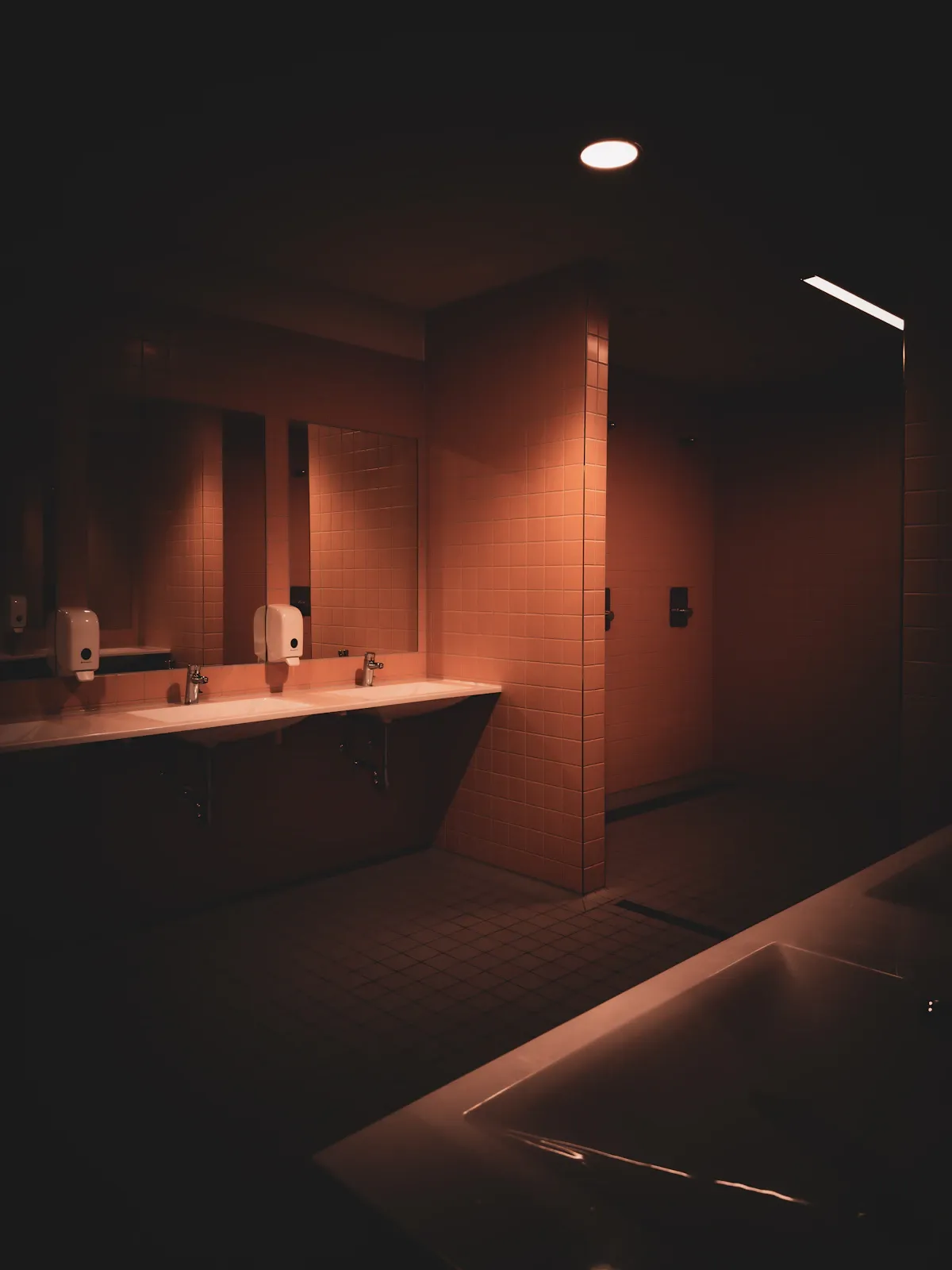
Five hundred years ago, our ancestors wound down their evenings by firelight, with darkness closing in naturally around them. Today, we scroll under bright bathroom LEDs at midnight and wonder why sleep feels impossible. So what if the fix is not another supplement or app, but simply turning off the lights before you step into the shower?
What Is Dark Showering?
Dark showering is exactly what it sounds like. You shower with the lights off, or with only a dim nightlight or candle for guidance. No overhead fixtures, no vanity glow, no phone screen lighting up the room. Some people crack the door slightly to let in a sliver of hallway light. But the goal is the same: remove as much artificial light as possible from your shower routine.
The trend picked up steam on social media in early 2026, with people claiming it changed their relationship with nighttime rest. Videos showed dark bathrooms paired with whispered testimonials about falling asleep faster and waking up more refreshed. It sounds almost too simple to matter. Yet the idea has caught the attention of sleep researchers, psychologists, and physicians who say there is real science backing it up.
At its core, dark showering is not really about the water. It is about what happens to your brain when you remove light input during a vulnerable, relaxing moment. Mr. S Giriprasad, a psychologist at Aster Whitefield Hospital who reviewed the topic for OnlyMyHealth, notes that the practice diminishes visual input so you can focus on bodily sensations in a more meditative state, creating a unique window for your nervous system to shift gears before bed.
Why Dark Showering Matters for Your Sleep
To understand why this matters, you have to look at how your body prepares for sleep. Your circadian rhythm, often called your internal body clock, relies heavily on light cues. When light hits your eyes, especially blue-white light from LED bulbs, it suppresses melatonin production. Melatonin is the hormone that signals to your brain that it is time to sleep. Bathroom lights are frequently some of the brightest in a home, designed for grooming precision, not for winding down.
The Conversation highlighted a laboratory study of 116 adults in which typical room lighting between dusk and bedtime reduced early-night melatonin levels by about 70% compared with very dim light. That same exposure also shortened the total duration of melatonin release by roughly 90 minutes. In a separate experiment, just 30 minutes of standard bathroom lighting at bedtime was enough to drop melatonin levels and increase self-reported alertness.
Most people take warm showers in the evening specifically to help with sleep. Warm water causes blood vessels near your skin to dilate, which helps your core body temperature drop afterward. Chelsie Rohrscheib, a neuroscientist and head of sleep research at Wesper, explained that the body must undergo a slight drop in core body temperature, usually by about one degree, to initiate sleep. A warm shower temporarily raises your temperature, and when you step out, the rapid cooling mimics the natural process that occurs before sleep.
But here is the problem: if you take that sleep-friendly warm shower under blazing lights, you are sending your brain two contradictory signals at the same time. The warm water says "sleep." The bright light says "stay awake." Dark showering removes the contradiction. You get the thermal benefit of the warm water without the melatonin-suppressing blast of light. Your circadian rhythm gets a clean, consistent signal.
The Anxiety Connection Goes Beyond Light
There is another layer here that goes deeper than circadian biology. Darkness has a unique effect on anxiety and mental chatter. When you remove visual input, your brain has fewer stimuli to process. For people who lie in bed replaying conversations or overthinking tomorrow's to-do list, this sensory reduction can be genuinely helpful.
Fox News reported that doctors say dark showering appears to reduce symptoms of both anxiety and insomnia. You cannot check your phone in the dark. You cannot examine your skin in the mirror or notice things that trigger self-criticism. You are simply standing in warm water, feeling the temperature and the sound. It becomes an informal meditation practice for people who would never sit still long enough to meditate.
Time magazine reported similar findings, noting that a dim-light shower can act as a "soft attentional anchor" with less visual input and fewer cues to problem-solve or plan. The dark reduces cognitive load, while the warm water activates your parasympathetic nervous system, the "rest and digest" mode that counteracts stress hormones like cortisol. Together, these effects can lower your heart rate and slow your breathing in a way that directly prepares your body for sleep.
Real-World Impact: What People Are Actually Experiencing
The science sounds neat on paper. But does it actually work for real people trying to fix real sleep problems?
The reports so far are encouraging but nuanced. HELLO! magazine spoke with sleep experts who emphasized that dark showering is not a magic cure for clinical insomnia or serious sleep disorders. Mr. Giriprasad notes that while dark showering is an excellent way to enhance sleep hygiene, it is a supportive tool rather than a direct treatment for chronic insomnia. If you have been diagnosed with a condition like sleep apnea, a dark shower will not replace proper medical treatment. But for people with mild sleep difficulties, the kind where you just cannot seem to wind down or your brain will not stop running, it appears to make a noticeable difference.
People who have tried it consistently report two main benefits. First, they fall asleep faster. Second, they describe a qualitative shift in how relaxed they feel before sleep, not just physically but mentally. The transition from "awake and thinking" to "drowsy and calm" feels smoother.
Medical News Pakistan approached the trend with healthy skepticism, asking whether dark showering is a genuine sleep hack or just another wellness myth. Their conclusion was that while controlled clinical trials on dark showering specifically are still lacking, the underlying principles (light reduction, temperature manipulation, sensory deprivation) are all well-supported by existing sleep research. The trend itself may be new, but the science behind it is not.
How to Try Dark Showering Safely
If you want to test this out, a few practical tips will make the experience better and safer. First, do not go completely pitch black if that makes you anxious. Use a small nightlight or candle, or leave the hallway light on with the door cracked. The goal is reducing light, not creating a disorienting void.
Second, make sure your bathroom is a safe space in dim conditions. Know where your soap, shampoo, and towel are before you turn the lights off. Keep the floor clear of trip hazards. Use a bath mat with good grip. A slip in the dark is not the kind of relaxation anyone is looking for.
Third, keep the water warm, not hot. Extremely hot water can actually raise your core temperature too much, which works against the cooling effect you want. Aim for comfortably warm, the kind of temperature that makes your shoulders drop without turning your skin red.
Finally, try to make this the last thing you do before bed. The whole point is to carry that relaxed, dark-adapted state directly into your bedroom. Do not turn on bright lights to brush your teeth afterward. Keep a dim light on in your bedroom, or use a warm-toned lamp, and go straight from the dark shower to your bed.
The Bigger Picture About Sleep Hygiene
Dark showering is a useful tool, but it is really just one piece of a much larger puzzle. Good sleep hygiene involves consistent bedtimes, limiting caffeine in the afternoon, keeping your bedroom cool, and reducing screen exposure in the evening. Dark showering fits neatly into that last category. It is another way to tell your brain, through action rather than intention, that the day is over.
What makes this trend different from most viral wellness hacks is that it costs nothing, requires no equipment, and has virtually no downside when done safely. You are not buying an expensive gadget or subscribing to a service. You are just flipping a switch in the opposite direction.
The real question is whether you can resist the instinct to check your phone one last time before trying it. Have you ever showered in the dark, and if so, did you notice any difference in how you felt afterward?
Comments