
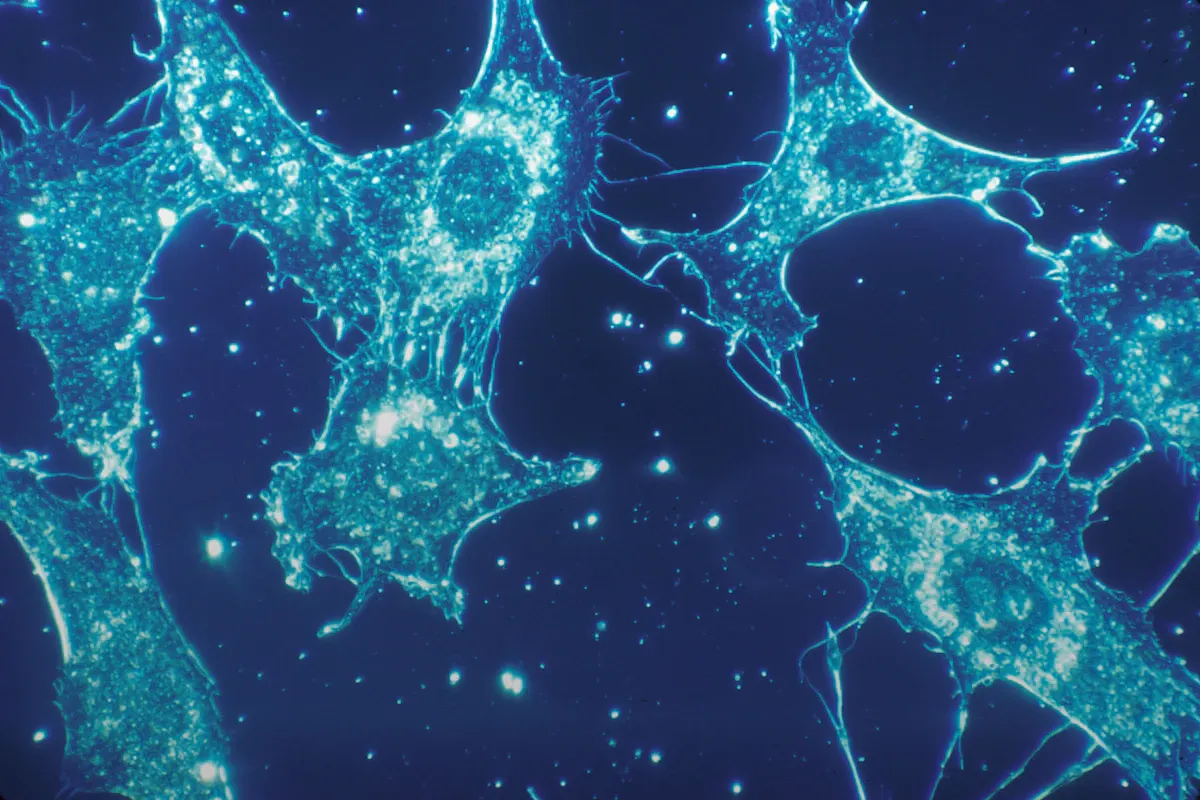
Two years ago, if you asked a neuroscientist how many different molecular machines run inside a single human brain cell, they would have shrugged. They knew the number was big, but nobody had a real count. Today, thanks to a team at Weill Cornell Medicine, we have a map of those invisible machines, and the scale is staggering.
What Are mRNA Variants, Exactly?
Think of your DNA as a massive cookbook sitting on a shelf. It holds recipes for everything your body builds. But a cookbook on a shelf does not cook anything by itself. You need someone to actually copy the recipe and bring it to the kitchen.
That is what mRNA does. mRNA is the messenger copy of a gene, carried out of the cell nucleus and into the main body of the cell where proteins get built. Every time your cells need to make something, they grab the DNA recipe, transcribe it into mRNA, and follow those instructions.
But here is where it gets interesting. The copying process is not always a clean, one-to-one transcription. Cells can selectively chop out or keep different sections of the recipe before finalizing the copy. This process is called alternative splicing. It means a single gene can produce multiple different mRNA versions, called isoforms.
Imagine a single recipe for soup. One copy says add chicken. Another copy, from the exact same page, says add beef. A third says skip the meat entirely. You get three completely different meals from one original recipe. Your brain does this constantly. One gene might produce several distinct mRNA variants, each carrying slightly different instructions.
Scientists have known about alternative splicing for decades. What they did not have was a complete picture of just how much of it happens in the brain, and exactly which variants appear in which specific types of brain cells.
Why Mapping Brain mRNA Variants Matters
The brain is the most complex organ in your body. It contains billions of neurons, along with glial cells, immune cells, and vascular cells that support them. Each cell type has a different job, and that job requires a different molecular toolkit.
Previous genetic maps of the brain mostly looked at which genes were turned on or off in different regions. That is useful, but it misses a critical layer of detail. Two cells might both be using the same gene, but if they produce different mRNA variants from that gene, they could end up with very different proteins doing very different work.
The Weill Cornell team built something fundamentally new. They assembled what they describe as the most comprehensive atlas to date of mRNA isoforms in the mouse and human brain. Instead of just asking which genes are active, they asked which exact versions of those genes are present, in which exact cells.
To do this, they used a technique called long-read RNA sequencing. Standard RNA sequencing technology cannot reliably detect differences between mRNA isoforms, so the researchers turned to a more expensive and time-consuming approach. Long-read sequencing reads much longer stretches of mRNA in one go, so you can see the full structure of each variant without guessing. The team recorded each individual cell and the long-read RNA sequences it produces, allowing them to identify isoforms from hundreds of thousands of individual mouse and human brain cells.
The result is a detailed catalog of the molecular diversity hidden inside brain cells. The atlas, which builds on smaller datasets the same team produced in 2018 and 2021, will serve as a basic reference for studying normal and abnormal brain function and development.
Alternative Splicing Is Especially Wild in the Brain
Alternative splicing happens everywhere in your body. Your liver does it. Your heart does it. But the brain takes it to another level entirely. The new atlas captures this complexity at unprecedented resolution.
There is a good reason for that. Neurons need enormous molecular flexibility. A neuron in your visual cortex has to form precise synaptic connections, respond to specific neurotransmitters, and maintain those connections for decades. A neuron in your motor cortex has a completely different set of demands. Both cells share the same genome, but they customize their protein toolkit through splicing.
The researchers found that even within a given cell type, the isoforms for some genes varied considerably depending on where the cell resides and the stage of the brain's development. Many of these variants are specific to certain cell types, meaning they likely play roles unique to those cells.
Real-World Impact on Neurological Disease Research
This is not just an exercise in cataloging. It has direct implications for understanding and treating brain diseases.
Many neurological conditions have been linked to problems with RNA splicing. When the splicing machinery goes wrong, cells start producing the wrong variants of critical proteins. It is like a factory that keeps shipping the wrong version of a product.
But until now, researchers studying these diseases often could not tell whether a splicing error was actually causing the problem or was just a side effect. Without a complete reference map of what normal splicing looks like across all brain cell types, there was no baseline for comparison.
The new atlas changes that. If a researcher studying a brain disease finds an unusual mRNA variant showing up in a patient's brain tissue, they can now check the atlas to see whether that variant is normally present in healthy cells or whether it is truly abnormal. This kind of reference is essential for figuring out which molecular changes actually drive disease and which are just noise.
The atlas also opens doors for drug development. Several companies are already working on therapies that target RNA splicing directly. These are called antisense oligonucleotides, and they work by binding to specific mRNA sequences to correct splicing errors. But designing these drugs requires knowing exactly which mRNA variant you are trying to fix or block. A comprehensive atlas of normal brain isoforms gives drug designers a much better starting point.
There is also a broader genomics angle here. Most large-scale brain genetics studies have identified genetic variants associated with neurological diseases. The tricky part is figuring out what those genetic variants actually do. Many of them sit in non-coding regions of DNA, meaning they do not change the protein itself. Instead, they likely affect how the gene is spliced. With this atlas, researchers can connect those genetic variants to specific mRNA isoforms and start tracing the chain from DNA change to disease.
Think about what that means in practice. A geneticist finds a DNA variant associated with increased risk of a neurological disorder. In the past, they might note the nearby gene and stop there. Now they can look up that gene in the mRNA atlas, see which specific isoforms it produces in the relevant brain cell types, and form a much sharper hypothesis about the biological mechanism involved.
The Bigger Picture of Brain Complexity
We tend to think of the brain in terms of regions and circuits. The prefrontal cortex handles decision-making. The hippocampus handles memory. But this atlas reveals another layer of organization hiding beneath those familiar categories.
Your brain cells are not just differentiated by location. They are differentiated by their internal molecular machinery in ways we are only beginning to appreciate. Two neurons sitting right next to each other in the same brain region might be running almost entirely different sets of mRNA variants. It is like discovering that two houses on the same street have completely different wiring behind their walls.
This has implications that go beyond disease. It shapes how we think about basic brain function. Learning and memory, for example, are known to involve changes at synapses, the connections between neurons. Many of those changes depend on locally produced proteins. Neurons can modify which mRNA variants they ship out to distant synapses in response to experience. The atlas provides a map of the raw materials available for that process.
There is also a fundamental biology question here that remains unanswered. How does a cell decide which mRNA variant to produce? The splicing machinery is guided by a complex set of proteins and regulatory RNA molecules, and the rules governing their behavior are not fully understood. Having a complete catalog of the output is a crucial step toward reverse-engineering the rules themselves.
The Weill Cornell team has made this atlas publicly available, and other research groups are already beginning to use it. As more data gets layered on top of this reference, including data from diseased brains, aging brains, and developing brains, the picture will only get richer.
Your brain is not running on a fixed set of genetic instructions. It is running on a vast, dynamic, and deeply customized collection of molecular variants that shift from cell to cell and moment to moment. We just got our first real map of that hidden world. The question now is what we will discover once we start exploring it properly. What do you think is the most exciting possibility that could come from understanding the brain at this level of detail?
Comments