
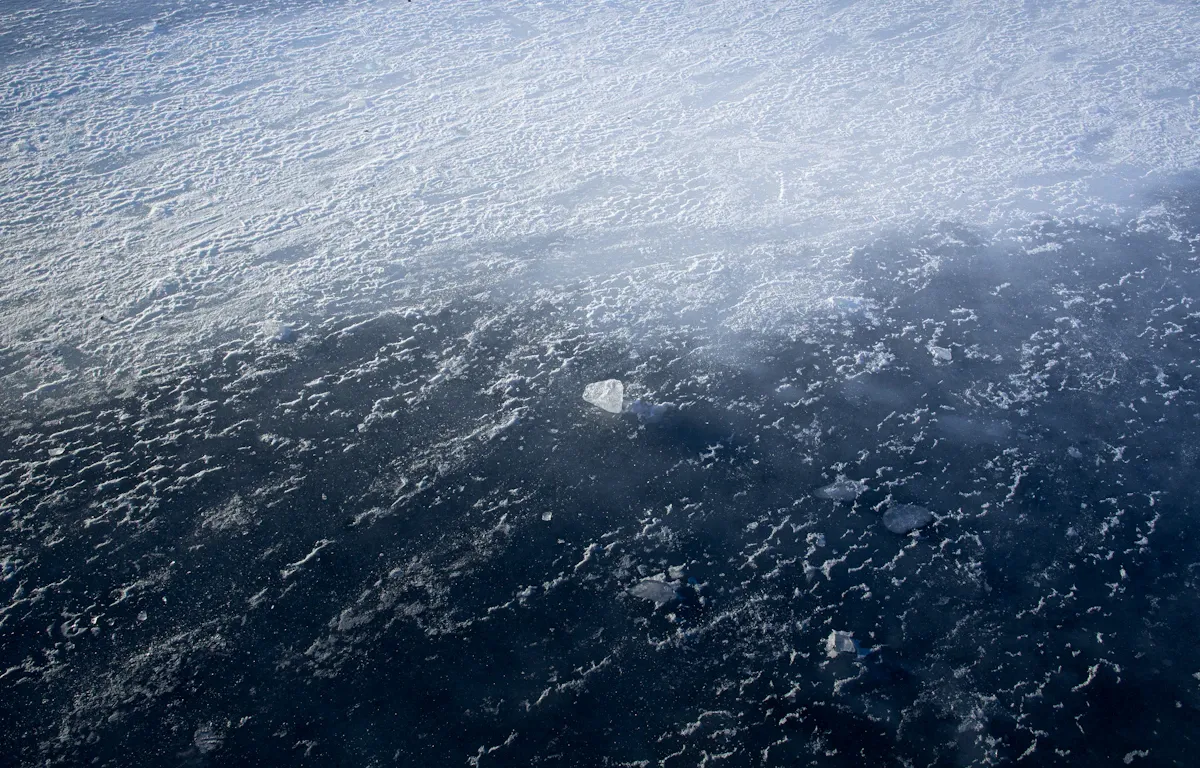
Fifteen years ago, the Arctic was mostly a frozen afterthought in global security planning. Today, Russian military exercises run near NATO borders, Chinese vessels push into northern waters, and GPS signals vanish over Scandinavia on a regular basis, turning everyday navigation into a strategic blind spot.
The Arctic Has Become a Military Chessboard
The High North used to be considered a strategic buffer. Its brutal weather and thick ice made large-scale military operations nearly impossible for most of the year. That assumption is dead.
Russia has maintained the largest Arctic military footprint of any nation, basing a substantial portion of its naval forces in its northern fleet. Moscow has reopened and modernized Soviet-era Arctic bases, installed new radar systems, and deployed advanced surface-to-air missiles along its northern coastline. These are not defensive gestures. They project power across the entire Arctic Ocean.
China, meanwhile, has pushed its way into the conversation. Beijing calls itself a 'near-Arctic state,' a label that no international treaty actually recognizes. That has not stopped Chinese icebreakers from sailing through Arctic waters or Chinese vessels from showing interest in the region's mineral wealth. Beijing has framed its ambitions around a 'Polar Silk Road,' linking Arctic shipping to its broader trade infrastructure. The partnership between Moscow and Beijing in the Arctic is not a formal alliance, but it functions like one on the water.
NATO has responded, but slowly. Finland and Sweden joined the alliance in 2023 and 2024, adding roughly 2,300 kilometers of new Arctic coastline to NATO's northern flank. Norway has increased its defense budget and hosted more allied exercises. Yet the alliance still lacks a dedicated Arctic command structure, something several military analysts have called a serious gap.
GNSS Jamming, Drone Flights, and Gray Zone Tactics
The most visible sign of Arctic tension is not troop movements. It is the invisible war being waged against satellite navigation.
GNSS jamming, which targets the Global Navigation Satellite System that includes GPS, has become a routine nuisance across northern Scandinavia. Norwegian authorities have documented repeated episodes where GPS signals are disrupted near the Russian border, affecting civilian aviation, shipping, and emergency services. These disruptions are not accidental. They require deliberate electronic warfare equipment, and they correlate directly with Russian military exercises in the region.
The technique is clever because it sits in the gray zone between peace and war. Jamming a GPS signal does not destroy anything. Nobody dies, at least not directly. But it degrades a country's ability to navigate, coordinate, and respond. It forces NATO pilots to rely on backup systems. It complicates search-and-rescue operations in some of the harshest terrain on Earth. And it sends a clear message: we can blind you whenever we want.
Drone activity adds another layer. Norwegian intelligence has tracked increasing numbers of unmanned aerial vehicles flying near sensitive military installations and energy infrastructure. Some of these drones are believed to be conducting surveillance on gas pipelines, power grids, and communication nodes. Others appear to be testing NATO's air defense response times.
Why Norway Feels the Pressure First
Norway sits on the front line of this emerging conflict. The country shares a border with Russia in the far north, and its territorial waters give NATO direct access to the strategically vital Barents Sea. That geography makes Norway both valuable and vulnerable.
The Norwegian Intelligence Service has warned repeatedly that Russia views the Arctic as a zone of strategic competition, not cooperation. Moscow's ability to disrupt GNSS signals over Norwegian territory demonstrates that Russian electronic warfare capabilities extend well beyond its own borders. For Norway, this is not a theoretical threat. It is a daily operational reality.
Norwegian defense officials have also raised alarms about undersea infrastructure. The Nord Stream pipeline sabotage in September 2022 proved that critical energy infrastructure in northern European waters can be targeted with plausible deniability. Norway's extensive network of subsea cables and pipelines sits in exactly the kind of remote, difficult-to-monitor environment where such an attack could be repeated.
The Myth of an Arctic 'Free-for-All'
There is a counter-narrative worth examining. Several Arctic researchers argue that the fear of an Arctic war is overblown, driven more by media sensationalism than actual evidence.
They point out that the Arctic Council, which includes Russia, still functions on technical and environmental issues. Cooperation on search-and-rescue, scientific research, and maritime safety has continued even after relations collapsed over Ukraine. The researchers identify three specific myths: that the Arctic is a lawless frontier, that resources will trigger armed conflict, and that military buildups automatically lead to war.
There is merit to this caution. The Antarctic has remained demilitarized for decades despite competing territorial claims. International law, particularly the United Nations Convention on the Law of the Sea, provides a framework for resolving Arctic disputes. Norway and Russia successfully negotiated a maritime boundary in the Barents Sea in 2010, proving that diplomacy can work even between rivals.
But here is the problem with that argument. The Arctic Council deals with environmental and scientific cooperation. It has no mandate to address military activity, electronic warfare, or hybrid threats. The mechanisms that prevented conflict in the past were designed for a different geopolitical era. They were not built to handle GNSS jamming campaigns, drone surveillance operations, or coordinated Russian-Chinese naval patrols.
What Comes Next for NATO's Northern Flank
The trajectory is concerning. As Arctic ice recedes due to climate change, new shipping routes become navigable for longer periods each year. The Northern Sea Route, which runs along Russia's northern coast, could cut transit times between Europe and Asia compared to the Suez Canal. That commercial value raises the strategic stakes considerably.
Who controls those routes? Who enforces rules along them? Who protects the infrastructure that makes them viable? These questions do not have clear answers under current international arrangements.
NATO faces a strategic dilemma. The alliance can treat the Arctic as a secondary theater, focusing its resources on the Baltic, the Black Sea, and eastern Europe. Or it can invest heavily in cold-weather capabilities, surveillance infrastructure, and a dedicated Arctic command. The latter option is expensive and politically complicated. The former option leaves a growing gap that adversaries are already exploiting.
The reality is that the Arctic is no longer a frozen backwater. It is an active theater of geopolitical competition where the rules are still being written. GNSS jamming and drone flights may seem like minor irritants compared to tanks and missiles, but they represent a deliberate strategy to erode NATO's operational advantage without crossing the threshold of armed conflict. The question is not whether the Arctic will become more contested. It already is. The real question is whether the West will treat it with the urgency it deserves before the balance of power shifts in ways that become difficult to reverse. What do you think NATO should prioritize in the High North: military infrastructure, diplomatic frameworks, or something else entirely?
Comments